Every part that leaves your facility carries your name. If one fastener fails on an assembly line or - worse - in the field, the cost goes far beyond replacing the piece. You’re looking at downtime, warranty claims and a reputation that takes years to rebuild. That’s why leading manufacturers in automotive, aerospace and precision machining treat hardness testing as non-negotiable.
Why Hardness Variability Happens
Even when your upstream processes run smoothly, material inconsistencies creep in. Slight variations in raw material chemistry, heat treatment temperature swings or tempering time differences create hardness outliers. These aren’t always visible. A fastener can look perfect and still be too soft to hold a clamp load or too brittle to handle vibration.
Batch sampling catches some problems, but it misses isolated bad parts. When you’re shipping millions of components, a 0.1% defect rate still means thousands of questionable parts reaching customers. That’s where 100% inline hardness sorting changes the game.
How Eddy Current Sorting Works
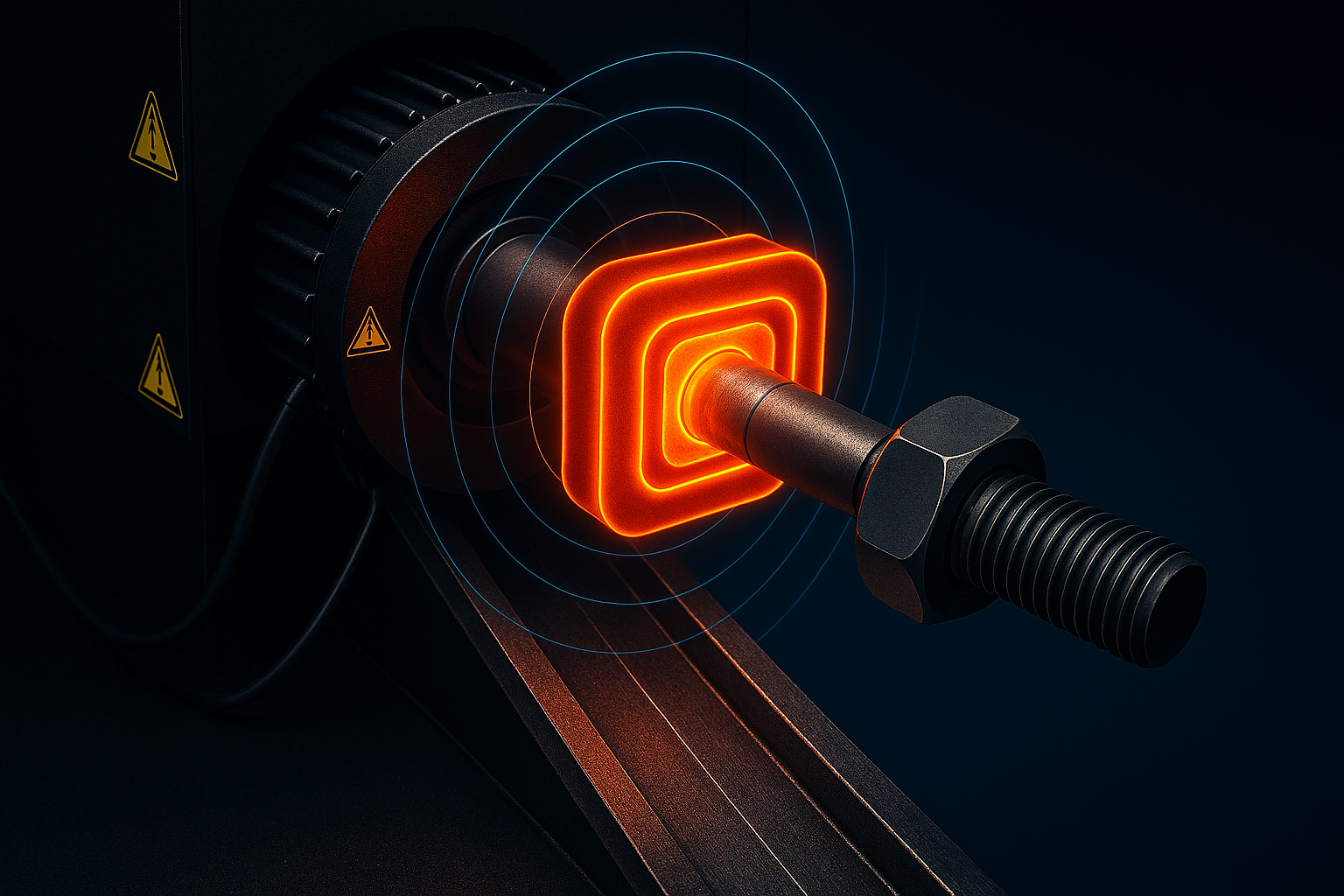
Modern hardness sorting equipment uses eddy current technology to evaluate every single part at production speeds. Here’s what happens: parts pass through an alternating current field created by a coil. This induces small electrical currents in the metal. How those currents flow - their amplitude and phase - changes based on the material’s microstructure, hardness and conductivity.
The system compares each part’s signal against a known good standard. Parts outside the acceptable range get automatically rejected into a separate bin. You are not guessing. You are not sampling. Every piece is verified before it ships.
Beyond Hardness
Hardness sorting does more than check heat treat quality. Eddy current coils detect:
Grinding burns that alter surface hardness
Case depth inconsistencies on carburized parts
Material mix-ups where wrong alloys enter your line
Threads weakened by decarburization layers
These conditions cannot be seen by optical inspection. Hardness sorting catches them before assembly.
Real Results on the Factory Floor
Let’s imagine a Tier 1 automotive supplier running 250,000 wheel studs daily. Their heat treater has occasional furnace band issues, creating soft pockets in about 0.3% of parts. With batch sampling, some soft studs reach customers. With inline eddy current sorting, every soft stud hits the reject chute. The supplier ships with confidence, and their customer’s assembly line never sees a cross-threaded or stripped stud.
For aerospace contractors, the stakes are higher. A single fastener failure in a wing skin or engine mount creates catastrophic risk. Hardness sorting provides proof that every part met spec before installation.
Integrating Sorting Into Your Lines
Mectron builds hardness sorting systems that integrate directly with your existing feeding and packaging equipment. Parts move through at rates matching your fastest machinery. Coils adjust for different diameters and materials without lengthy changeovers. And operators see real-time pass/fail counts and can pull rejected parts to metallurgically confirm.
The technology doesn’t require programming on a PhD level. Modern interfaces show simple green/red indicators. Set your limits once, and the system runs continuously and flags only what needs attention.
Protecting Your Margins and Reputation
Rejecting parts in-house costs way less than managing field failures. Sorting equipment pays for itself by preventing the following:
Customer sorting charges
Emergency replacement shipments
Liability from warranty claims
Production shutdowns at customer plants
More importantly, it protects your relationship with buyers who demand zero defects. When you certify 100% inspection, you’re selling peace of mind.
The Bottom Line on Part Reliability
Hardness variability is a known fact of metal manufacturing. Raw materials are going to differ, furnace temperatures might wander and quench rates can fluctuate. The question isn’t whether your process will produce an occasional bad part, but whether you catch it before your customer does.
Eddy current hardness sorting gives you that assurance at production speeds. Every part proves itself before it ships. It’s the final checkpoint that makes everything else matter for manufacturers serious about reliability.