Why SHOT Show 2026 Belongs on Your Calendar (And What Mectron Brings to the Table)

Why SHOT Show 2026 Belongs on Your Calendar (And What Mectron Brings to the Table)

The SHOT Show isn’t just any trade show. It’s the center of the shooting, hunting and outdoor industry. From January 20–23, 2026, the Venetian Expo and Caesars Forum in Las Vegas will transform into a hub of energy, expertise and opportunity. Whether you’re a buyer, manufacturer or industry professional, here’s why you should be there and how Mectron Inspection Systems fits into the picture.

1. Unmatched Industry Networking and Deal-Making

The SHOT Show is the biggest gathering for people in the shooting, hunting and outdoor industries. It brings in buyers from across the U.S. and around the world. This event is a major opportunity for companies to make new contacts, see the latest products and form partnerships that help them grow.

Mectron Inspection Systems, a family company with a long history, will be there. They will be showing their fast inspection machines. These machines work behind the scenes to check the quality of ammunition and fasteners, making sure they meet high standards. If you make or buy these parts, talking to Mectron could help you make your products more dependable.

2. Exclusive Access to Education and Trends

SHOT University provides classes to help store owners and shooting ranges succeed. The classes teach important topics like rules, online advertising, stock control and working with customers. For those who care deeply about quality, Mectron's skill in detailed part inspection fits right in with these lessons. Their systems, which use lasers and vision cameras to examine ammunition and fasteners, reflect the kind of attention to detail that industry leaders strive for. Learning about their technology could inspire new approaches to your own operations.

3. Discover Innovations Like Mectron’s Inspection Systems

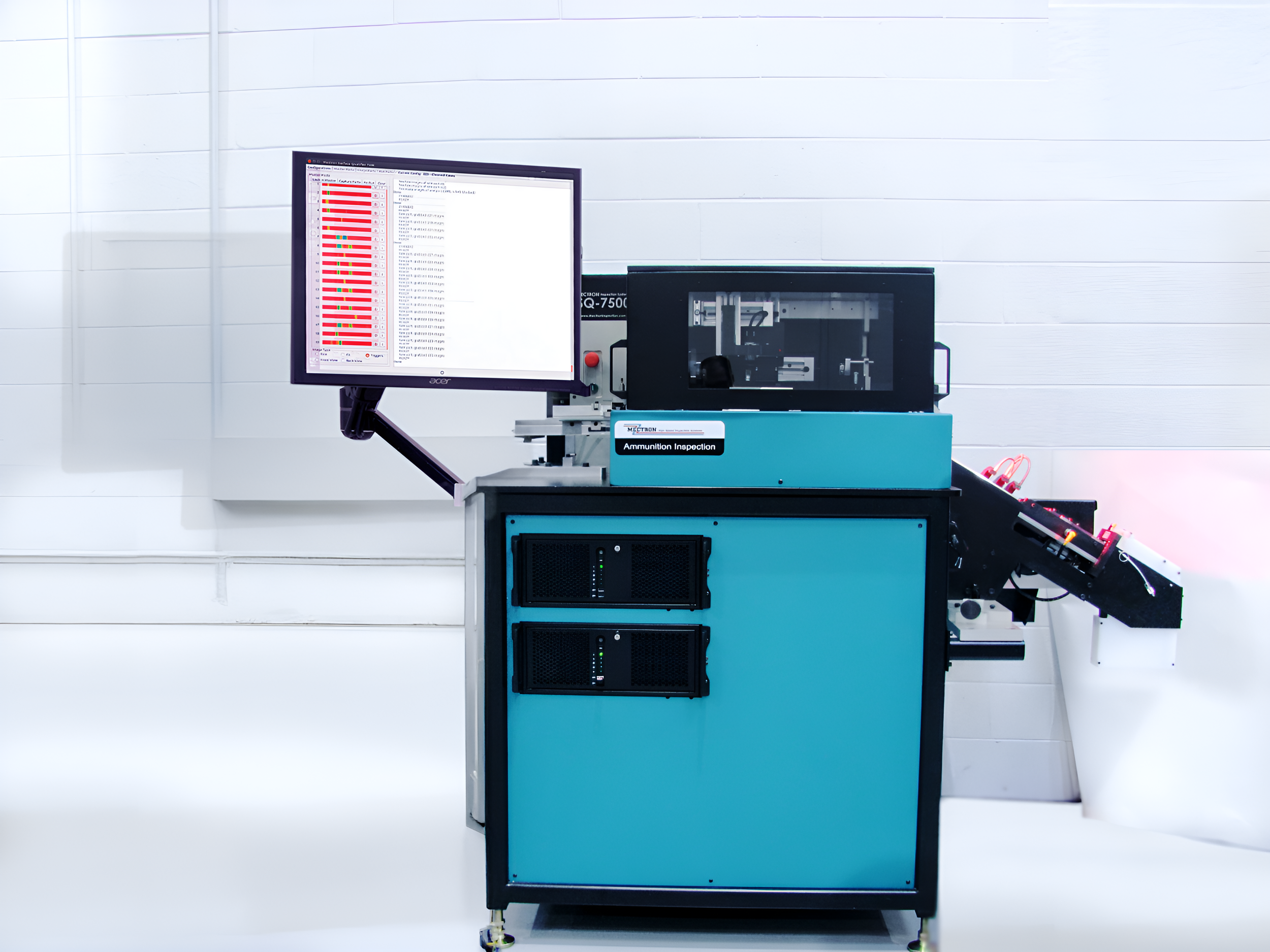
The SHOT Show is known for guns and outdoor equipment, but it also features the tools that make these products work safely. For instance, Mectron brings machines that use lasers to check every angle and surface of ammunition and fasteners for flaws. These systems help manufacturers deliver products that meet strict standards, reducing the risk of defects. Seeing Mectron’s machines in person (like their Surface Qualifier) offers a hands-on look at how quality assurance can be integrated into production.

4. Experience the Energy of Las Vegas

Las Vegas is more than a backdrop; it’s part of the SHOT Show experience. The city ensures attendees can work and play with ease, from world-class dining and entertainment to convenient transportation options like shuttles and ride-shares. After days spent exploring the exhibit halls, unwind at networking mixers, happy hours or even the SHOT After Dark events at venues like OMNIA and JEWEL. The city's energy reflects the show's intensity, making it a perfect destination for productive business and enjoyable downtime.


5. Support Industry Advocacy and Growth

Revenue from SHOT Show directly supports the NSSF’s efforts in advocacy, compliance education and firearm safety programs. By attending, you’re contributing to initiatives that benefit the entire industry. Companies like Mectron embody this spirit of support. Their inspection systems help manufacturers adhere to regulations and quality benchmarks and create trust and safety across the supply chain.

Tying It All Together

For over 50 years, Mectron Inspection Systems has served key industries like aerospace and ammunition. Their exhibit at SHOT Show 2026 highlights their commitment to quality assurance, which is a key concern for attendees focused on reliability and performance. Mectron's technology helps manufacturers improve their processes and helps buyers find dependable suppliers, supporting the show's emphasis on excellence and innovation.

Navigating Heat Treat Verification: Why Complete Inspection Matters for Fasteners

Navigating Heat Treat Verification: Why Complete Inspection Matters for Fasteners

In fastener manufacturing, heat treating is the essential step that gives metal parts their strength and durability. But when this process doesn't go as planned, the results can be problematic. Issues like uneven hardness, material flaws or incorrect tempering can quickly undermine a fastener's performance. This can lead to failures in everything from automotive assemblies to aerospace systems. For manufacturers in Taiwan and beyond, addressing heat treat-related defects is a must for maintaining product integrity and customer trust.

At Mectron Inspection Systems, we understand the nuances of heat treat verification. Basic inspection can miss the small flaws that heat treating can cause. Our method is different. We use specialized technology built to find these specific defects early, preventing expensive mistakes down the line. In fact, every sorter we make comes equipped with our own Mectron-built differential coil, made specifically for the task of hardness sorting and verifying heat treatment. This isn’t an add-on; it’s built into the core of our systems, providing a layer of scrutiny that goes beyond surface-level checks.

The Heat Treat Challenge in Fastener Production

Heat treating involves controlled heating and cooling processes to alter a fastener’s mechanical properties, such as hardness and strength. However, variations in time, temperature or quenching can cause inconsistencies. For example, under-hardened fasteners might lack the required strength, while over-hardened ones could become brittle and prone to cracking. These issues aren’t always visible to the naked eye or detectable with simple dimensional checks. That’s where specialized inspection becomes important.

Taiwan is a major producer of fasteners, but its ability to check parts for heat treat defects is limited. This creates a slowdown in production. Manufacturers there need inspection systems that are both very fast and extremely accurate. Traditional methods (like manual sampling or basic eddy current testing) often fall short because they can’t provide full coverage or detect subtle deviations. This is where Mectron’s technology steps in.

How Mectron’s Differential Coil Works

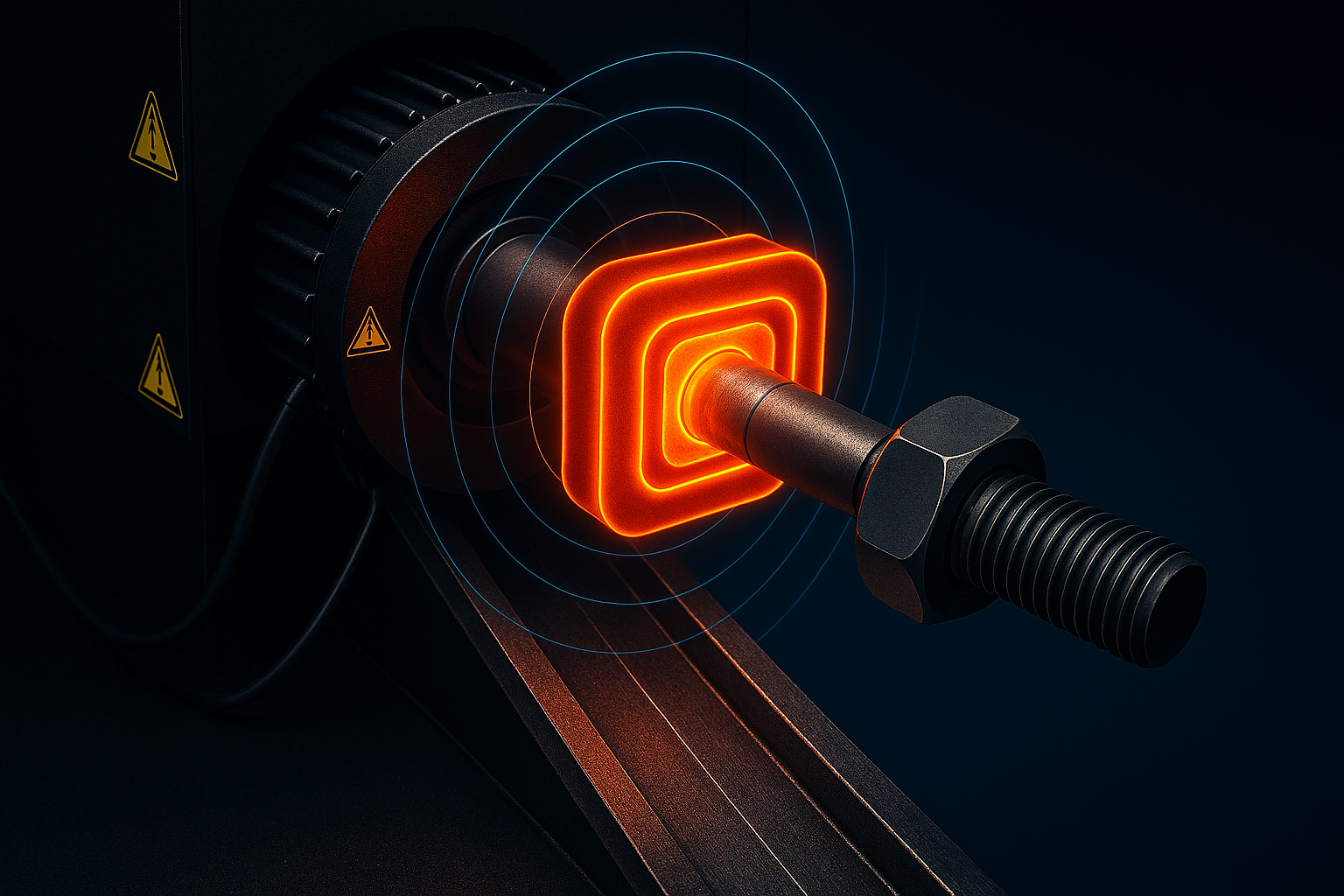
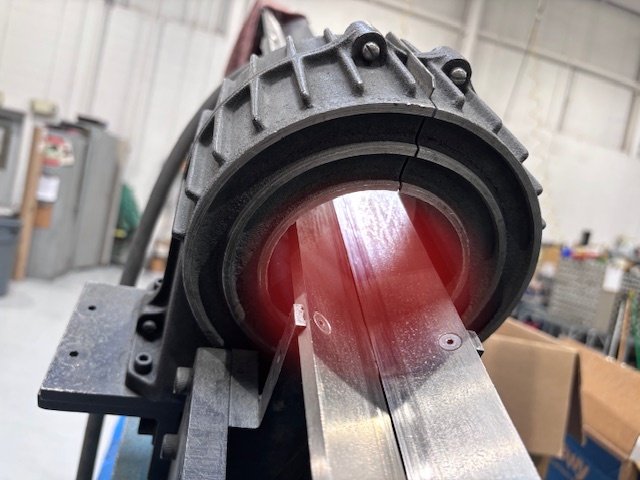
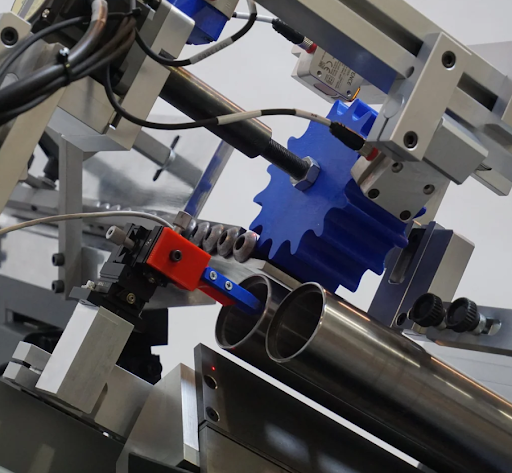
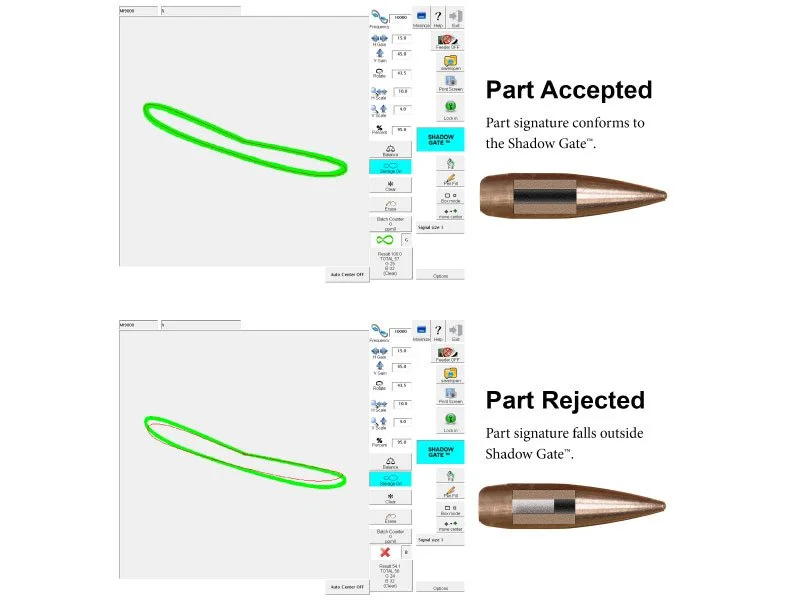
Our differential coil technology is integrated into every inspection machine we offer, including the Qualifier® series. This coil generates a magnetic field that interacts with the fastener’s material properties. As parts pass through the coil, the system captures a detailed “magnetic signature” for each one. Deviations in this signature (caused by variations in hardness, material composition or heat treat inconsistencies) are flagged immediately.

This method is non-destructive and operates at high speeds, which makes it perfect for inline inspection. For instance, our systems can process hundreds of fasteners per minute and provide real-time feedback without slowing down production. The differential coil is effective for identifying:

  • Inconsistent hardness levels across a batch

  • Material mixes (e.g., wrong alloy used)

  • Cracks or structural weaknesses induced by heat treating

  • Plating or coating variations that affect performance

Why This Matters for Taiwanese Manufacturers

Taiwan plays a large role in the global fastener industry, supplying high-quality parts to manufacturers around the world. But when local heat treat sorting capacity can’t keep up, some flawed fasteners may go undetected. Using Mectron’s differential coil technology gives producers the ability to inspect every single part, identifying hard-to-spot defects before they become a problem. This is especially important for fasteners used in safety-critical applications, such as automotive or aerospace, where failures are not an option.

Our systems easily integrate into existing production lines because they require minimal operator intervention. The differential coil’s sensitivity makes sure that even minor heat treat deviations are detected, reducing the risk of recalls or customer complaints. Our machines also include dimensional laser scanning and magnetic imagery. Together, these technologies give you a complete picture of fastener quality by connecting heat treat verification directly to full defect detection.

Real-World Impact

Consider a Taiwanese manufacturer producing bolts for electric vehicle battery modules. These bolts endure extreme stress and heat. Inconsistencies in their heat treatment could cause early failures, risking both safety and the manufacturer's reputation. Mectron's inspection systems allow producers to verify the hardness and material integrity of every single bolt, ensuring they meet strict industry standards and customer requirements.

The Mectron Advantage

What makes our approach different is how we examine the entire part. Many systems only check one characteristic at a time, which can miss important flaws. Ours brings together laser measurement and magnetic field analysis for a complete view. A good example is our Qualifier® Q-4000 system. It uses several lasers and eddy current technology together, finding size variations and material issues in a single pass. This dual approach is essential for heat treat verification, as it correlates surface features with underlying material properties.

Our differential coil technology is made for busy production floors. It's a hands-on answer for Taiwanese manufacturers who need to sort more parts. The coil is designed to sharply reduce false rejects and quickly adjust to different fastener sizes. This keeps your line moving fast without compromising on quality.

Conclusion

Verifying heat treatment is a decisive stage in making fasteners. For manufacturers in Taiwan and elsewhere, choosing inspection systems with integrated differential coil technology does more than pass quality audits. It secures your production process for the long term and guarantees dependable products. At Mectron, we build our machines to directly confront heat treat defects, giving you the clear results and assurance required to compete effectively.

If you’re looking to improve your heat treat sorting capabilities, explore how Mectron’s inspection solutions can bring clarity to your production line. Let’s work together to ensure every fastener meets its mark.


What Is an Eddy Current Testing Machine and How Does It Work?

What Is an Eddy Current Testing Machine and How Does It Work?

At Mectron Inspection, we know that finding flaws in metal parts without damaging them is a big deal in industries like aerospace, automotive and manufacturing. That’s where our patented Eddy Current Testing Machine comes in. This powerful tool uses electromagnetic fields to spot cracks, corrosion and other hidden defects, keeping equipment safe and operations running smoothly.

In this blog, we’ll break down how eddy current testing works, the science behind it and where it’s used most. Whether you're new to nondestructive testing (NDT) or just curious about the technology, we’ll make it easy to understand.

The Science Behind Eddy Current Testing

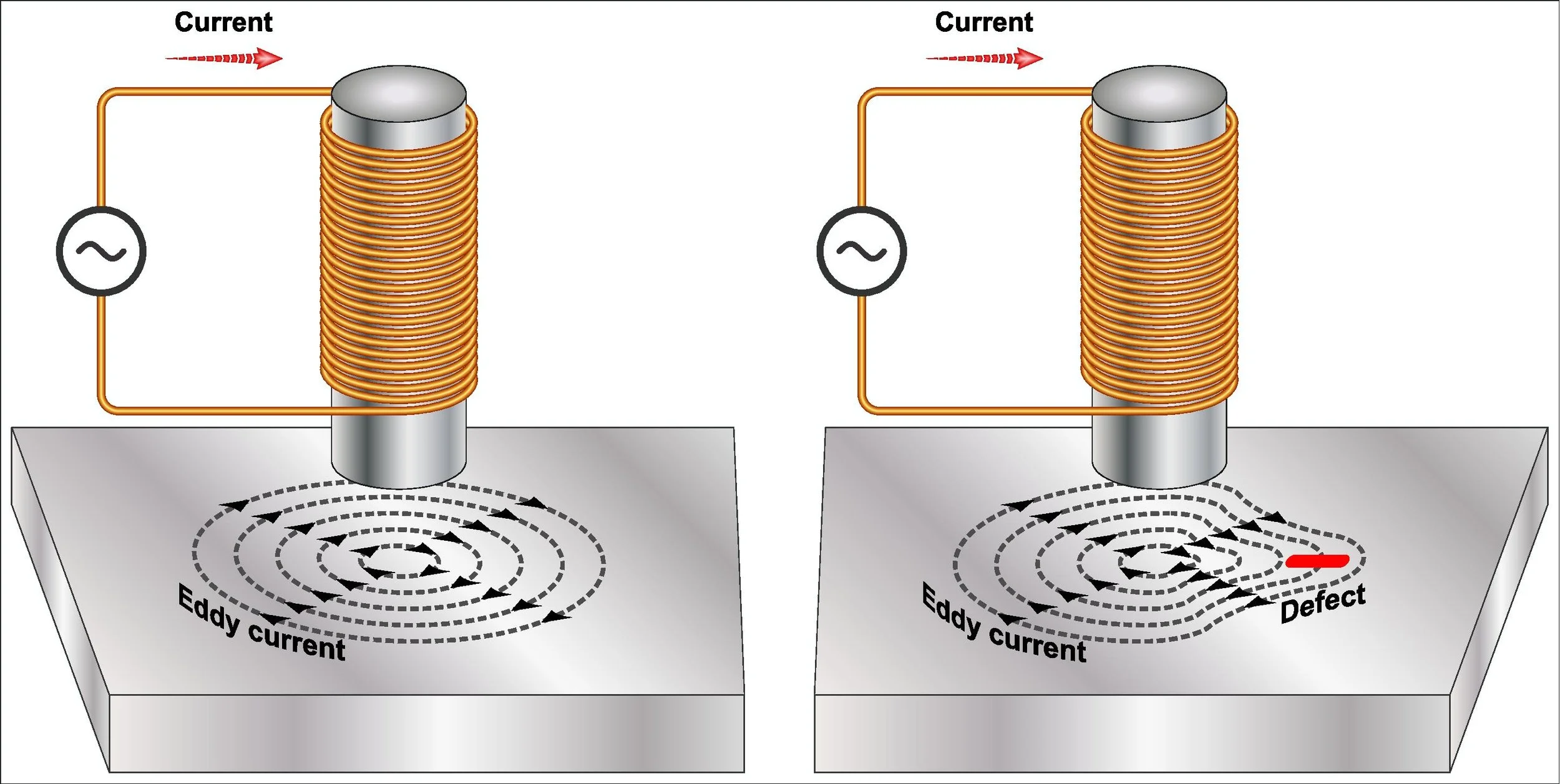
Eddy current testing is based on electromagnetic induction, the same principle that makes wireless chargers and metal detectors work. Here’s how it happens:

  • A coil inside the machine carries an alternating current (AC), creating a magnetic field around it.

  • When this coil gets close to a conductive material (like metal), the magnetic field induces swirling electrical currents (called eddy currents) inside the material.

  • Flaws in the material disrupt these currents, changing the magnetic field’s behavior.

  • The machine detects these changes, revealing cracks, thinning or corrosion without touching or harming the part.

Since different metals and flaws affect eddy currents in unique ways, the machine can identify problems based on signal patterns.

How an Eddy Current Testing Machine Works

An eddy current testing system has a few key parts:

  • Probe (Coil): The handheld or automated sensor that generates and measures eddy currents.

  • Oscillator: Produces the alternating current that powers the coil.

  • Signal Processor: Analyzes changes in the eddy currents to detect flaws.

  • Display/Output: Shows results as graphs, charts or alarms for inspectors.

When the probe scans a metal surface, it sends real-time data to the processor. If there’s a crack or defect, the signal shifts, alerting the operator. Some machines can even measure material thickness or coating layers.

Where Eddy Current Testing Shines: Key Applications

Because it’s fast, versatile and doesn’t require direct contact, eddy current testing is used across many industries.

1. Aerospace & Aviation

  • Checks aircraft components (engine blades, landing gear, fuselage) for fatigue cracks.

  • Inspects heat-exchanger tubes for corrosion.

2. Automotive Manufacturing

  • Tests suspension parts, welds and bearings for hidden flaws.

  • Verifies the quality of electric vehicle battery components.

3. Oil & Gas

  • Monitors pipelines and storage tanks for wall thinning.

  • Examines drill rods and valves for stress cracks.

4. Railways & Infrastructure

  • Scans train wheels and tracks for wear and fractures.

  • Evaluates bridge cables and structural steel.

5. Medical Devices & Electronics

  • Ensures surgical tools and implants are defect-free.

  • Tests circuit boards and heat sinks for irregularities.

Unlike X-rays or ultrasound, eddy current testing doesn’t need liquids or radiation, making it safer and easier for many inspections.

Advantages of Eddy Current Testing

  • No surface prep needed: Works through paint, coatings and dirt.

  • Fast results: Scans parts in seconds, ideal for high-volume production.

  • Works on complex shapes: Can inspect tubes, curved surfaces and tight spaces.

  • Detects tiny flaws: Finds hairline cracks and early-stage corrosion.

However, it only works on conductive materials (metals) and may struggle with deep subsurface flaws. For those cases, other NDT methods like ultrasonic testing might be better.

Why Choose Mectron Inspection for Eddy Current Testing?

At Mectron Inspection, we design and supply eddy current testing machines that meet strict industry needs. Our equipment is built for clarity and ease of use, helping inspectors make confident decisions. Whether you’re in aerospace, energy or heavy manufacturing, we have solutions to keep your operations safe and efficient.

Top Trends in Industrial Inspection Machines for 2025

Top Trends in Industrial Inspection Machines for 2025

The industrial inspection landscape is undergoing a radical transformation. As factories, warehouses and production lines evolve, so do the tools that keep quality in check. 2025 is shaping up to be a year of breakthroughs in inspection machines from AI-driven vision systems to modular inspection platforms.

At Mectron Inspection, we’re keeping a close eye on these shifts because staying ahead means using the right tools at the right time. Here's what's changing in the industry and how you can use it to compete better.

1. AI Takes Defect Detection to the Next Level

AI is now a key part of inspection systems. It checks products faster and more accurately than people, cutting waste and keeping quality steady.

  • Computer vision scans products in milliseconds, spotting microscopic cracks, misalignments or contaminants that might escape the naked eye.

  • Machine learning adapts to new defect patterns over time, meaning the system gets smarter with each inspection cycle.

  • Predictive analytics flag potential equipment failures before they disrupt production, minimizing downtime.

For industries like pharmaceuticals and automotive (where even minor defects can lead to costly recalls) AI-driven inspection is becoming non-negotiable.

2. Modular Inspection Platforms Offer Unmatched Flexibility

One-size-fits-all inspection systems are fading into obsolescence. Instead, manufacturers are turning to modular inspection machines that can be reconfigured for different tasks.

  • Swappable sensors allow the same machine to handle metal detection, X-ray scanning or 3D imaging with minimal downtime.

  • Scalable software lets businesses upgrade capabilities without replacing entire systems, making it easier to adapt to new regulations or product lines.

This works well for companies that make different products or are growing fast.

3. Collaborative Robots (Cobots) Join the Inspection Team

Robots aren’t only for assembly lines anymore. They’re becoming necessary partners in quality control. Cobots work alongside human operators and handle repetitive or hazardous inspection tasks.

  • Vision-guided cobots can inspect welds, painted surfaces or electronic components with consistent accuracy.

  • Force-sensitive grippers allow delicate handling of fragile items, reducing damage during inspection.

Letting cobots handle repetitive work frees up people to focus on more important tasks like solving problems and making decisions.

4. Real-Time Data Integration for Smarter Decisions

Inspection is about using data to improve the whole production process.

  • IoT-connected sensors feed live data into centralized dashboards, giving managers instant visibility into quality trends.

  • Blockchain-enabled traceability ensures inspection records are tamper-proof, which is crucial for regulated industries like medical devices.

Factories can adjust processes on the fly to reduce waste and increase efficiency with real time insights.

5. Non-Destructive Testing Goes Mainstream

Traditional inspection methods often require disassembling or destroying samples. Newer techniques, however, provide more thorough checks without compromising the product.

  • X-ray and CT scanning reveal internal defects in electronics, castings and composite materials.

  • Laser scanning captures 3D measurements of complex geometries, ensuring components meet exact specifications.

These methods are gaining traction in aerospace, automotive and medical manufacturing, where structural integrity is a top concern.

Staying Competitive in 2025

The companies that thrive will be those that integrate these trends into their workflows early on. 

Here’s how to get started:

  • Audit your current inspection process. Identify bottlenecks where AI or automation could help.

  • Prioritize scalability. Choose systems that can grow with your production needs.

  • Train teams on new tech. Ensure operators understand how to maximize the potential of AI and cobots.

At Mectron Inspection, we’re helping businesses future-proof their quality control with the latest inspection machines. Are you upgrading an existing line or building a new facility? The right tools make all the difference.

Lighting Matters: Optimizing Camera Systems for Uneven Surfaces

Lighting Matters: Optimizing Camera Systems for Uneven Surfaces

Lighting is the most important part of any visual inspection camera system. A well-lit part is easy to inspect. But what happens when the surface is uneven, textured or reflective? Shadows, glare, and inconsistent contrast can turn a straightforward inspection into a guessing game. 

At Mectron Inspection Systems, we know that the right lighting setup can mean the difference between catching a flaw and missing it entirely.

Why Uneven Surfaces Challenge Vision Systems

Not all parts are flat and smooth. Castings, machined components and textured materials often have grooves, curves or rough finishes that scatter light unpredictably. 

Without the right lighting a visual inspection camera system could struggle with:

  • Shadows: Deep recesses or angled surfaces can create dark spots and hide defects.

  • Glare: Reflective materials like polished metal can create bright spots that obscure details.

  • Low Contrast: If lighting is too uniform, subtle imperfections might blend into the background.

The solution? Choosing the right lighting technique for the job.

Diffuse vs. Directional Lighting: What Works Best?

Not all light is created equal. Depending on the surface, you might need soft, scattered illumination or focused, angled beams.

1. Diffuse Lighting: Eliminating Harsh Shadows

Diffuse lighting spreads light evenly, reducing sharp contrasts and softening shadows. This works well for:

  • Matte or lightly textured surfaces

  • Parts with fine details that need consistent visibility

  • Reducing glare on semi-reflective materials

Ring lights and dome lights are common diffuse sources, wrapping the part in uniform illumination.

2. Directional Lighting: Enhancing Surface Defects

Sometimes, you want shadows, just the right kind. Directional lighting highlights variations in height and texture by casting controlled shadows. This is ideal for:

  • Detecting scratches, dents or raised edges

  • Inspecting machined parts with distinct grooves or patterns

  • Improving contrast on flat but uneven surfaces

LED bar lights or spotlights placed at an angle can emphasize surface irregularities without overwhelming the camera.

Tips for Reducing Glare and Shadows

Even with the right lighting type, small adjustments can make a big difference.

1. Adjust the Angle

Lighting positioned straight on can cause glare, while side lighting may cast unwanted shadows. Experiment with different angles to find the sweet spot where defects stand out without interference.

2. Use Multiple Light Sources

A single light might not cover all the challenges of an uneven surface. Combining diffuse and directional lighting can balance illumination. For example, a ring light for overall visibility and a spotlight to highlight specific features.

3. Control Ambient Light

Stray light from windows or overhead fixtures can interfere with inspection consistency. Enclosing the inspection area or using hoods helps maintain controlled lighting conditions.

4. Test Different Light Colors

Sometimes, colored lighting (like red or blue) can enhance contrast on certain materials, making flaws easier to detect than with standard white light.

The Right Lighting Makes All the Difference

A visual inspection camera system is only as good as its lighting setup. At Mectron, we’ve seen firsthand how the right technique can turn an unreliable inspection into a dependable one. Whether it’s a rough casting or a polished component, understanding how light interacts with surfaces ensures that no flaw goes unnoticed.

Because in inspection, what you see is what you get, so you’d better see it clearly.

How Vision Systems Improve Fastener Part Quality Control

How Vision Systems Improve Fastener Part Quality Control

Traditional contact measurement methods—like Coordinate Measuring Machines (CMMs) with tactile probes—have been the go-to for dimensional inspection for years. But as manufacturing demands change and improve, optical measuring machines are showing to be a great alternative.

This blog discusses how optical measurement stacks up against modern contact methods and is supported by real world examples and recommendations.

Fasteners might be small, but their impact is huge. A single defective screw, bolt, or rivet can lead to product failures, recalls, or even safety hazards. Traditional inspection methods—like manual checks or sampling—can miss flaws, slow down production, and leave too much room for human error.

That’s where vision inspection systems step in. By automating the quality control of fastener parts, manufacturers can catch defects faster, reduce waste, and maintain tighter standards. Let’s explore how these systems work and why they’re becoming essential in fastener production.

The Problem with Manual Fastener Inspection

For years, fastener manufacturers relied on human inspectors to spot defects. Workers would visually check parts for issues like:

  • Dimensional errors (wrong thread pitch, incorrect head size)

  • Surface defects (cracks, burrs, corrosion)

  • Material inconsistencies (improper hardness, plating flaws)

But manual inspection has limitations:

  • Fatigue and human error – Even the best inspectors miss defects after hours of repetitive checking.

  • Slow speeds – Checking every fastener manually slows down production.

  • Inconsistent standards – Different inspectors might judge defects differently.

Vision systems solve these problems by bringing speed, accuracy, and repeatability to quality control of fastener parts.

How Vision Inspection Works for Fasteners and Improves Fastener Part Quality Control

Modern vision systems use high-resolution cameras, lighting, and software to examine parts in detail. Here’s how they verify fastener quality:

  1. Non-Contact Testing (No Damage, No Hassle) - Unlike mechanical gauges that can scratch or deform parts, vision inspection checks fasteners without touching them. This means:

    1. No risk of damaging delicate coatings or threads.

    2. No wear and tear on inspection tools.

    3. The ability to inspect 100% of parts, not just samples.

  2. High-Speed Defect Detection (Catching Flaws in Milliseconds) - Vision systems process images at incredible speeds, checking hundreds—or even thousands—of fasteners per minute. They can detect:

    1. Thread defects (missed threads, incorrect pitch)

    2. Head deformities (off-center drives, incorrect shapes)

    3. Surface flaws (cracks, scratches, plating issues)

Because the system compares each fastener against digital tolerances, there’s no guesswork—just pass/fail results in real time.

  1. Automated Sorting (Keeping Bad Parts Out of Shipments) - When a defect is found, the system can automatically:

    1. Divert faulty parts into rejection bins.

    2. Flag trends (like recurring burrs on a specific machine).

    3. Log data for traceability and process improvement.

This prevents bad fasteners from reaching customers while giving manufacturers insights into production issues.

Key Benefits of Vision-Based Fastener Inspection

1. Fewer Defects Reach Customers

By inspecting every single fastener—not just samples—manufacturers can catch problems before they cause field failures. This reduces returns, complaints, and warranty claims.

2. Faster Production with No Bottlenecks

Manual inspection slows down lines. Vision systems work at full production speeds, keeping pace with modern manufacturing demands.

3. Consistent Standards (No More Inspector Disagreements)

Unlike human inspectors, vision systems apply the same criteria to every part, eliminating subjective judgments.

4. Better Compliance with Industry Standards

Many industries (automotive, aerospace, medical) require strict fastener quality documentation. Vision systems automatically generate reports, making audits easier.

Real-World Applications

Automotive Fasteners

A single car uses thousands of fasteners. Vision systems verify that every bolt, nut, and clip meets exact specs—preventing assembly line issues.

Aerospace & Defense

Fasteners in aircraft must withstand extreme forces. Vision inspection ensures no defects compromise structural integrity.

Medical Device Fasteners

Surgical screws and implants must be flawless. Vision systems detect microscopic imperfections that could affect performance.

Is Vision Inspection Right for Your Fastener Production?

If you’re still relying on manual checks or sampling, you’re likely letting some defects slip through. Vision systems provide a smarter way to maintain quality control of fastener parts—with faster speeds, better accuracy, and full traceability.

At Mectron Inspection Systems, we design vision solutions specifically for fastener manufacturers. Whether you need inline inspection for high-volume production or specialized checks for custom fasteners, we can help.

Ready to upgrade your quality control? Let’s talk about how vision inspection can work for you.


Comparative Analysis: Optical Measuring Machines Versus Traditional Contact Methods

Comparative Analysis: Optical Measuring Machines Versus Traditional Contact Methods

Traditional contact measurement methods—like Coordinate Measuring Machines (CMMs) with tactile probes—have been the go-to for dimensional inspection for years. But as manufacturing demands change and improve, optical measuring machines are showing to be a great alternative.

This blog discusses how optical measurement stacks up against modern contact methods and is supported by real world examples and recommendations.

How Contact Measurement Works (And Where It Falls Short)

Contact CMMs use a physical probe to touch a part’s surface, recording XYZ coordinates to determine dimensions. This method is well-established, but it has inherent limitations:

  • Slow Data Capture – Each point must be probed individually, making full-surface inspection time-consuming.

  • Potential for Part Damage – Force from the probe can deform soft or thin materials.

  • Limited Accessibility – Tight spaces and internal features may be impossible to reach.

Despite these drawbacks, contact methods remain useful for certain tasks—particularly when measuring rigid, well-defined geometries where physical probing is practical.

The Rise of Optical Measurement: Speed, Detail and Non-Contact Advantages

Optical measuring machines (such as structured-light scanners, laser scanners and vision-based systems) capture surface data without physical contact. They use light patterns instead, lasers or high-resolution cameras to generate dense point clouds in mere seconds.

Main Benefits Over Contact Methods

Full-Field Data in Seconds
Unlike CMMs, which collect single points sequentially, optical systems capture thousands—or millions—of data points in a single scan. This allows for faster inspection of complex surfaces.

No Risk of Surface Distortion
Delicate materials (thin plastics, rubber, or micro-components) can be measured without probe-induced deformation.

High-Resolution Capture of Fine Features
Optical systems excel at measuring small details like textures, intricate contours and micro-scale geometries that probes might miss.

Easier Automation for High-Volume Work
With no need for probe repositioning, optical systems integrate smoothly into production lines for rapid, repeatable inspections.

Case Studies: Where Optical Measurement Wins

1.Case Study: The Great Measurement Showdown – To Touch or Not to Touch?

Dimensional inspection presents the age-old debate between contact and non-contact methods (it’s like choosing between a scalpel and a laser – both get the job done, but one’s definitely messier). Traditional contact methods, like trusty CMMs and micrometers, have long been the workhorses of metrology, accurately poking and prodding parts point by point. But let’s be honest: they’re about as fast as a snail carrying a full toolbox. Enter non-contact systems—vision scanners, lasers and CT tech—that zip through measurements without leaving a fingerprint, perfect for delicate parts like surgical tools or micro-components that throw a fit if you so much as breathe on them wrong.

Of course, it’s not all sunshine and lasers. Non-contact systems can struggle with deep holes or shadowy crevices (thanks, physics) and sometimes, you just need the brute-force certainty of a physical probe. The real trick? Knowing when to go hands-off for speed and complexity (looking at you, aerospace and medical folks) or when to stick with contact for those micron-level demands. At the end of the day, the best method depends on whether your part prefers a handshake or a selfie. [1]

Why this matters: It’s not just about accuracy—it’s about not wrecking your parts in the process. Choose wisely.

2.Case Study: The Trusty Tools of Dimensional Metrology – When Old-School Still Rules

Let’s talk about the unsung heroes of measurement – the workhorse tools that have been putting in overtime since your grandpa was in the shop. We’re talking about calipers that have measured more parts than you’ve had hot coffees, micrometers that could detect a gnat’s sneeze and gage pins so precise they make Swiss watches look sloppy. These are the tools that built industries, one painstaking measurement at a time.

Take the humble gage pin – a $2 hero that puts million-dollar machines to shame when checking hole sizes. Or the CMM, that hulking beast of a machine that’s about as mobile as a bank vault but can measure with the patience of a saint. Sure, they might be slower than modern scanners, but when you need to know – really know – that a dimension is dead-on, these are the tools you call.

The dirty little secret? Even in our age of laser scanners and CT machines, we still regularly mix these classic tools with space-age tech. Why? Because sometimes you need that tactile certainty – the satisfying click of a gage pin seating perfectly or the firm grip of micrometer jaws telling you, “Yep, that’s exactly 0.500 inches.”

And let’s not forget the portable CMM arms – the rebel cousins of the fixed CMM. These bad boys can contort into positions that would make a yoga instructor jealous, getting into spaces their bulky relatives could only dream of. Sure, they might sacrifice a micron or two of accuracy for their freedom, but when you’re measuring an airplane wing or a turbine casing, that trade-off is worth it.

The Bottom Line: While flashy new tech gets all the attention, these trusty contact methods are still the backbone of dimensional metrology. They’re like the seasoned mechanics in your shop – they might not be as exciting as the new robotic tools, but when things need to be done right, they’re the ones you want on the job.

Why this matters: In a world obsessed with digital everything, sometimes the best measurement comes from actually touching the part. Old school? Maybe. Effective? Absolutely.

When Contact Methods Still Make Sense

Optical measurement isn’t a universal replacement. Contact CMMs still hold advantages in:

  • Hard-to-Scan Surfaces – Highly reflective or transparent materials may require tactile probing.

  • Dimensional Checks on Simple Features – If only a few critical dimensions are needed, a CMM can be more straightforward.

  • High-Accuracy Edge Detection – Some optical systems struggle with sharp edges where contact probes excel.

The Verdict

The best measurement method depends on the part, material and needed data density. For fast, non-contact inspection of complex or delicate components, optical systems often outperform traditional methods. However, contact CMMs remain valuable for specific high-tolerance applications.

At Mectron Inspection Systems, we help manufacturers navigate these choices with the right equipment for their needs. Need help determining the best inspection approach for your application? Contact our team for expert guidance.

Key Industries That Benefit from Automated Inspection Systems

Key Industries That Benefit from Automated Inspection Systems

Many industries now depend on machine-based examination systems to maintain product consistency. These help find imperfections while keeping production flowing. 

Vehicle Production

Car manufacturers need comprehensive component examination. Machine vision helps spot surface flaws, assembly errors, and welding inconsistencies in metal parts. This prevents problematic pieces from moving further down the line.

Tire production also benefits from automated scanning. Systems check rubber products for bubbles, uneven thickness, or tread pattern defects before they leave the factory.

Medical Product Manufacturing

Pharmaceutical companies use many verification steps. Packaging inspection confirms proper labeling and sealing, while content checking verifies pill shapes and counts. This helps prevent distribution of incorrect medications.

Surgical instrument manufacturers use measurement systems to confirm tool dimensions. Implant manufacturers check surface finishes to make sure they are smooth and clean before sterilization.

Food Production Facilities

Processing plants use vision systems to scan for materials that aren’t supposed to be there. Package inspection verifies seal integrity and label placement. Color sorting separates products by quality grade automatically.

Beverage bottling lines use fill-level detectors to maintain consistent volumes. Canning operations check for dented containers or damaged lids that might negatively impact food safety.

Aircraft and Spacecraft Parts

Aerospace manufacturers look at structural parts using multiple methods. Metal components go through surface scanning while composite materials need deeper examination techniques to find hidden flaws.

Engine part inspection is particularly thorough. Turbine blades undergo dimensional checks and material integrity verification to prevent in-flight failures.

Final Product Assembly

Consumer goods manufacturers use these systems to verify proper assembly. Appliances undergo functional testing while cosmetic products receive packaging checks before shipping.

Clothing manufacturers implement fabric scanning to identify weaving defects or staining. Footwear companies verify sole attachment and stitching quality automatically.

Why These Methods Matter

As production volumes grow, manual checking becomes impractical. Machine-based examination provides consistent results without slowing operations. These approaches help reduce material waste while maintaining product consistency across industries.

The Future of Optical Inspection: New Technologies and Industry Trends

The Future of Optical Inspection: New Technologies and Industry Trends

The way factories check product quality is going through major shifts. New approaches in camera systems, multi-view imaging, and computer analysis are creating better ways to find problems during production. These changes help spot issues more consistently, lower material waste, and keep operations running smoothly. Below we examine key developments changing how manufacturers verify quality.

Faster Checking for Busy Production Lines

As factories produce more items in less time, inspection systems must keep pace. Older methods often couldn't handle the speed needed without missing details. Current solutions use specialized cameras that take pictures at remarkable speeds while maintaining clarity. Some systems can examine hundreds of items per minute while still catching tiny flaws.

Better light sensors now work well in challenging environments, like areas with glare or shadows. This matters greatly for small parts in electronics where lighting isn't always ideal. By maintaining thorough checking at higher speeds, manufacturers avoid slowing down their lines while still maintaining quality standards.

Finding Hard-to-See Surface Problems

Spotting inconsistencies has always been difficult. The most advanced systems today use a high speed camera while spinning the part to view it from several angles for a more complete inspection. This approach reveals flaws that might hide from a single viewpoint, and limits the need for multiple light sources and camera setups.

Smarter Analysis Using Computer Learning

The brains behind modern inspection come from sophisticated software. These programs study thousands of images to learn the difference between normal variations and actual defects. As they process more examples, they become better at making correct judgments.

Unlike older systems that needed constant manual adjustments, newer versions automatically adapt when products change. This is helpful for items with designs like medical tools or electronic circuits that have complexities. The software adjusts its checking parameters without human input, saving time and reducing errors.

Connecting Inspection to Factory Equipment

Modern quality checking now works directly with other machines on the production floor. When connected to robotic arms or sorting devices, inspection systems can immediately remove faulty items from the line. This prevents bad products from moving further through production.

This direct connection means fewer workers need to monitor quality manually. The systems share data with factory networks and allow supervisors to see patterns and adjust processes quickly. When equipment starts to wear out, the system can flag problems before they affect anything.

Looking Ahead

Quality verification continues moving toward faster, more thorough methods. The combination of rapid imaging, multiple viewing angles, and self-improving software creates stronger quality control. These changes help factories maintain standards while keeping production efficient. As manufacturing needs grow more demanding, these inspection methods will become even more important for delivering consistent products.

How Advanced Inspection Equipment  Reduces Defects in Manufacturing

How Advanced Inspection Equipment Reduces Defects in Manufacturing

Non-destructive testing (NDT) methods, such as eddy current inspection, are important tools in the manufacturing industry for quality control. Mectron’s eddy current machines are a solution that manufacturers can use to quickly and accurately identify defects without damaging tested components.

In manufacturing, identifying and addressing defects early in the production process is necessary for maintaining product quality and reducing waste. Inspection equipment works to achieve this because it allows manufacturers to detect issues before they turn into costly problems. By combining new technologies, like automation and artificial intelligence, inspection systems have become better than ever at decreasing errors and improving production outcomes.

Inspection Equipment’s Role in Reducing Defects

Inspection equipment evaluates products at different stages of the manufacturing process. By using tools like vision systems, sensors, and measurement devices, manufacturers can identify defects such as cracks, misalignments, or inconsistencies in materials. Early detection keeps defective products from moving further down the production line. This saves time and resources and also makes sure that the final product meets the required standards.

Traditional inspection methods typically relied on time consuming manual checks that were prone to human error. Modern inspection systems, however, leverage technology to perform these tasks with greater speed and accuracy. Automated systems can scan thousands of components in a fraction of the time it would take a human operator; this reduces the chance of defects going unnoticed.

The Impact of Automation on Inspection Processes

Automation has transformed the way inspections are conducted in manufacturing. Automated inspection systems can work around the clock without fatigue, providing constant performance through the production cycle. These systems have high-resolution cameras and sensors that collect detailed data to provide a complete survey of each part.

One of the main benefits of automation is that it can handle large volumes of products quickly. For example, in industries like electronics or automotive manufacturing, where thousands of parts are produced daily, automated inspection systems can process each item efficiently. This speed does not come at the expense of accuracy; in fact, automated systems often outperform manual inspections in identifying even the smallest defects.

How AI Improves Inspection Capabilities

Artificial intelligence has also increased the abilities of inspection machines. AI systems can learn from data, improving their ability to detect defects over time. AI can look into patterns and trends, finding possible issues that might not be obvious to humans.

For example, AI algorithms can be taught to see small changes in product dimensions or surface finishes that could indicate a defect. This level of detail is useful in industries where even minor flaws can have heavy consequences, such as aerospace or medical device manufacturing.

AI can also help predict when equipment might fail or when defects are likely to occur, allowing manufacturers to take proactive measures. This predictive ability reduces defects and downtime, contributing to a smoother production process.

The Benefits of Reducing Defects in Manufacturing

Reducing flaws has a direct impact on a manufacturer’s main purpose. Fewer defects mean less waste, lower costs, and improved customer satisfaction. By putting money towards high-quality inspection equipment, manufacturers can achieve these benefits while staying competitive. The data collected by inspection systems can offer insights into the production process and manufacturers can use this information to find areas for improvement.

Conclusion

Inspection equipment is a cornerstone of modern manufacturing, enabling companies to detect and address defects with unparalleled accuracy and efficiency. The integration of automation and AI has further enhanced the capabilities of these systems, making them indispensable tools for reducing errors and improving production outcomes.

At Mectron Inspection Systems, we provide inspection solutions that help manufacturers achieve their quality goals. By leveraging the latest technologies, our systems empower businesses to minimize defects, reduce costs, and deliver superior products to their customers.


How Vision Inspection Systems Improve Fastener Quality Control

How Vision Inspection Systems Improve Fastener Quality Control

In manufacturing, the quality of fasteners is a top priority. These small components are used in everything from cars to airplanes, and even the smallest defect—like a crack, a misaligned thread, or a surface flaw—can cause major problems. This is where vision inspection systems come in; they offer a dependable way to make sure every fastener meets quality standards.

Mectron’s Inspection Approach

Mectron’s inspection technologies, including their vision inspection systems, are made to handle these challenges. By combining laser, eddy current, and vision-based methods, Mectron provides a complete solution for finding defects in fasteners. Vision inspection, in particular, is great at spotting surface issues that other methods might miss. For example, it can detect open burst cracks, recess imperfections, and through-hole defects using high-resolution cameras. This ensures that every fastener is checked thoroughly before it’s used in production.

Combining Vision Inspection with Eddy Current Technology

One of the best features of Mectron’s vision inspection systems is how well they work with other technologies, like the RCD-9500 Rotary Crack Detection system. The RCD-9500 uses a differential eddy current probe to find cracks and other internal flaws in fasteners. When paired with vision inspection, the system becomes even more powerful. While the eddy current probe checks for internal issues, the vision system scans the surface for visible defects. This combination makes sure that both inside and outside problems are caught, giving a full picture of the fastener’s condition.

How the RCD-9500 Improves Inspection Accuracy

The RCD-9500 itself is an impressive piece of equipment. It uses motorized rollers to rotate the fastener in place, letting the eddy current probe scan the part multiple times for more accuracy. Optical sensors make sure parts are fed, scanned, and sorted automatically, reducing the chance of human error. The system’s modular design lets it handle various fastener types, from small ball studs to more significant flanged parts. When used with Mectron’s EC600 digital eddy current instrument, the RCD-9500 can inspect up to 180 parts per minute, making it one of the fastest systems available.

Flexibility for Different Applications

However, the benefits of vision inspection systems do more than just provide speed and accuracy. They’re also very adaptable. Mectron’s systems can be customized for different industries and applications. For instance, the SQ-7500 Surface Qualifier uses image processing to find surface defects like dents, scratches, and discoloration. Meanwhile, the DSQ-9000 combines surface and dimensional inspection for 360-degree coverage of each fastener.

Production Line Integration

Another advantage of Mectron’s vision inspection systems is their ability to combine with existing production lines. The Q-5000 Inspection System, for instance, uses eight lasers to perform 360-degree dimensional inspections. When paired with vision inspection, it can find thread defects, feature deviations, and foreign material with incredible precision. The system’s touchscreen interface makes it easy to program and adjust inspection settings, while its automated sorting feature offers only defect-free parts to move forward in production.

Safety and Reliability

In industries where safety and reliability are necessary, Mectron’s vision inspection systems provide confidence. By catching defects early, they help manufacturers avoid recalls, reduce waste, and maintain their quality reputation. Whether it’s a small crack in a fastener or a surface flaw that could affect performance, Mectron’s systems are built to find it.

Conclusion

Vision inspection systems are an important tool for fastener quality control. By combining technologies like laser scanning, eddy current detection, and high-resolution imaging, Mectron has created inspection systems that set the standard for precision and reliability. For manufacturers looking to make sure their fasteners are high in quality, Mectron’s solutions offer a proven way to meet these expectations.


The Benefits of Eddy Current Inspection in Manufacturing

The Benefits of Eddy Current Inspection in Manufacturing

Non-destructive testing (NDT) methods, such as eddy current inspection, are important tools in the manufacturing industry for quality control. Mectron’s eddy current machines are a solution that manufacturers can use to quickly and accurately identify defects without damaging tested components.

Eddy Current Inspection

Eddy current inspection is a nondestructive testing method that uses electromagnetic induction to detect surface and subsurface defects in conductive materials.  When an alternating current passes through an inspection coil, it creates a magnetic field that produces eddy currents in the tested material. The flow of these currents is disrupted by any imperfections, such as cracks, material discrepancies, or hardness variations, triggering measurable changes that are detected by the system.

In industries where high-precision inspections are required, such as fastener manufacturing, ammunition production, and deep draw metal processing, this method is particularly effective. Eddy current inspection is unique for its high sensitivity to small imperfections, finding defects prior to the parts’ market release.

Eddy Current Machines of Mectron

Mectron’s eddy current machines feature technology and user-friendly features, providing fantastic inspection performance. For example, the MI8500 series uses Magnetic Imagery™, an advanced digital eddy current technique, to generate a complete magnetic signature of each part. This signature allows for:

  • Crack Detection: Identifying critical surface and subsurface cracks that may compromise product integrity.

  • Material Mix Identification: Distinguishing between various material compositions to prevent mix-ups.

  • Hardness Testing: Proper heat treatment and case depth to meet performance requirements.

  • Wire Seam and Induction Hardening Analysis: Pinpointing metallurgical defects that can affect long-term reliability.

In addition to metallurgical inspection, Mectron’s eddy current machines can sort parts for missing features, length variations, and gross defects—all while operating at high speeds. These systems deliver rapid, accurate results, streamlining quality control processes and minimizing downtime.

High-Speed Inspection for Demanding Applications

Mectron’s Q-Series machines integrate eddy current inspection with high-speed dimensional analysis to meet the needs of demanding applications. The Q-5000 system, for example, combines a 360° laser scan using up to eight lasers with digital eddy current inspection to provide the following:

  • Comprehensive 360° Analysis: Parts are inspected from every angle so that no defect goes unnoticed.

  • Rapid Results: High-speed inspection capabilities allow manufacturers to maintain production flow without compromising accuracy.

  • Flexible Sorting Options: Optional crack detection, CCD vision systems, and tilt plates provide customizable solutions for diverse inspection needs.

Whether inspecting fasteners, ammunition, or other precision components, Mectron’s systems deliver the most advanced inspection solutions on the market; they allow manufacturers to benefit from faster defect detection, reduced scrap rates, and improved product quality.

Advantages of Integrating Eddy Current Inspection

Applying Mectron’s eddy current machines into your quality control processes gives you the following advantages:

  • Non-Destructive Testing: Parts can be thoroughly inspected without any damage, preserving their usability and value.

  • High Sensitivity: Eddy current systems are capable of detecting the smallest defects, ensuring only flawless products proceed to the next stage.

  • Rapid Assessments: High-speed operation supports continuous production with very few interruptions.

  • Cost Efficiency: By identifying defects early, manufacturers can reduce waste, minimize rework, and lower overall production costs.

  • Versatility: Mectron’s eddy current machines can inspect a variety of materials and part types, making them suitable for diverse manufacturing applications.

  • Data-Driven Insights: Advanced systems like the MI8500 and Q-Series provide actionable feedback through real-time data, enabling continuous process improvements.

Why Choose Mectron’s Eddy Current Machines?

Mectron stands apart as an industry leader in non-destructive testing solutions. By combining eddy current inspection with advanced technologies, such as Magnetic Imagery™ and 360° laser scanning, their eddy current inspection provides remarkable accuracy and speed. Mectron’s inspection systems are easy to integrate into manufacturing environments, increasing efficiency and product reliability.

Mectron’s eddy current machines allow manufacturers to have peace of mind that their parts meet the most demanding quality standards. From fastener and ammunition inspections and beyond, Mectron’s solutions are precise and high-performing.

Conclusion

Eddy current inspection is a proven, non-destructive method facilitating product quality in manufacturing. Mectron’s advanced eddy current machines are unmatched in speed, sensitivity, and accuracy and are the perfect choice for manufacturers who want to optimize their quality control processes. Contact Mectron today to learn more about how these amazing machines can transform your end products.

How Vision Sorting Machines by Mectron are Revolutionizing Manufacturing

How Vision Sorting Machines by Mectron are Revolutionizing Manufacturing

Today, in the fast-paced manufacturing environment, efficiency and precision are important. Mectron Inspection Systems has made an entrance into the industry with its top-of-the-line vision sorting machines, offering manufacturers tools to enhance quality control and production processes. These machines leverage advanced imaging technology to provide accurate, high-speed sorting for a variety of applications and are leading the way to manufacturing excellence.

The Science Behind Mectron’s Vision Sorting Machines

Mectron’s sorting machines are based on advanced vision technology and can identify and sort components by specific criteria. The way these machines work is through cameras and patented light tunnel systems to inspect parts for scratches, dents, splits, and any other surface imperfections. Mectron’s patented laser arrays also perform 360-degree dimensional inspections to zero-defect performance on even the most intricate parts.

Mectron’s technological leadership is shown in the DSQ-9000. This machine combines visual and laser-based inspection to provide unprecedented accuracy in detecting defects in cylindrical parts. For manufacturers in industries including aerospace, automotive, ammunition, and many others, it’s a game changer.

Comprehensive Quality Control Across Industries

Mectron’s vision sorting technology isn’t limited to one sector. These machines cater to diverse industries, offering tailored solutions for specific manufacturing needs:

  • Automotive Sorting: Ensuring components meet stringent safety and performance standards.

  • Aerospace Sorting: Delivering precise inspections for critical applications.

  • Ammunition Sorting: Maintaining reliability and safety with inspections.

Transforming Fastener Sorting

Fastener sorting is one standout application of Mectron’s vision sorting machines. Mectron’s high-speed systems inspect bolts, screws, and precision components for defects such as foreign material, dimensional discrepancies, radial part damage, and metallurgical flaws, unlike manual or visual inspection methods. It dramatically reduces error rates, cuts costs, and increases throughput.

Mectron’s ability to sort and package components with exact piece counts also eliminates risks associated with traditional packing methods, ensuring consistency and quality at every stage of the supply chain.

Why Choose Mectron?

  • Advanced Technology: With tools like the DSQ-9000 and Q-Series machines, Mectron combines cutting-edge vision systems with laser technology for unparalleled accuracy.

  • Diverse Applications: From fasteners to ammunition, Mectron’s machines handle a wide range of components.

  • Cost-Effective Solutions: High-speed sorting at low costs provides a significant return on investment for manufacturers.

  • Reliable Results: Mectron’s commitment to zero-defect performance ensures every component meets exacting standards.

Paving the Way for the Future

By integrating vision sorting machines into their operations, manufacturers can achieve unprecedented levels of efficiency, accuracy, and consistency. Mectron Inspection Systems continues to push the boundaries of what’s possible in quality control, empowering businesses to stay competitive in a rapidly evolving market.

Whether it’s automotive parts, aerospace components, or precision fasteners, Mectron’s vision sorting technology is revolutionizing how manufacturers approach quality and efficiency. Experience the Mectron difference and elevate your manufacturing processes to new heights.

Automated Systems for Sorting Shells: Enhancing Efficiency and Accuracy

Automated Systems for Sorting Shells: Enhancing Efficiency and Accuracy

Mectron’s automated systems for sorting shells have completely transformed the ammunition industry by improving efficiency and accuracy. The advantage of these systems is that they can process large volumes of shells quickly to eliminate the need for manual sorting. 

In this blog, we look at how Mectron’s automation is improving the sorting process and what its benefits are to manufacturers.

Traditional Shell Sorting Challenges

The manfacutring industry has historically depended on manual labor for sorting and inspecting shells, as has the ammunition industry. While this traditional approach works, it is commonly time consuming, labor intensive, and subject to human error. As demand for ammunition increases, so does demand for sorting that’s fast and accurate.

Mectron's Automated Solution

Mectron Inspection, a leader in automated inspection technology, has created solutions to overcome traditional shell sorting challenges. These computerized systems work to simplify the process, cut costs, and generally improve quality.

Key Features of Mectron's Automated Shell Sorting Systems

High-Speed Sorting

Mectron's systems can process large volumes of shells at incredible speeds, significantly reducing production time and increasing throughput.

Advanced Inspection Techniques

Mectron's systems use state of the art technologies such as high speed cameras, laser scanners and eddy current inspection to detect even the most subtle defects, to guarantee only high quality shells are delivered.

Precise Dimensional Measurement

Critical dimensions like length, diameter, and wall thickness can be measured accurately by automated systems and can be assured to meet strict quality standards.

Material Analysis

Metallurgical defects, such as cracks, voids, and inclusions, that may compromise the integrity of the shell can be detected by eddy current inspection.

Customizable Solutions

Mectron systems are able to be customized for each and every customer to ensure the best performance and efficiency.

The Benefits of Automation

By implementing automated shell sorting systems, ammunition manufacturers can reap the following benefits:

  • Increased Efficiency: Automation systems greatly reduce the need for manual human labor, saving money and time.

  • Improved Quality Control: High quality shells are delivered to customers and the automated systems can detect defects that human inspectors may miss.

  • Enhanced Data Analysis: Valuable production metrics data is generated by automated systems, which help manufacturers identify trends, optimize processes, and make informed decisions.

  • Enhanced Safety: Automated systems can reduce the risk of accidents by minimizing the need for manual handling.

Mectron's Commitment to Quality and Innovation

Mectron's state of the art facility in Saline, Michigan, is staffed by experienced engineers who are committed to developing innovative solutions to the problems confronting the ammunition industry by using the latest technology. Manufacturers can be sure that their shell sorting processes are efficient, accurate and reliable through partnership with Mectron.

The Future of Shell Sorting

As the ammunition industry continues to evolve, automation will play an increasingly important role in maintaining competitiveness and meeting the demands of a global market. Mectron's automated shell sorting systems are at the forefront of this technological revolution, offering a powerful solution for the future of ammunition manufacturing.

Ammunition manufacturers can increase efficiency, improve quality control and gain a competitive edge in the marketplace by embracing automation.

How Mectron’s Screw Sorting Machines Improve Quality Control

How Mectron’s Screw Sorting Machines Improve Quality Control

There are several advantages offered by screw sorting machines that can have a substantial impact on a manufacturing operation. These include better quality control, improved efficiency, and reduced waste. Some additional benefits include the following:

  • Cost Cut-Out: Screw sorting machines keep defective parts from reaching the assembly lines. This goes a long way in cost savings, especially in industries where the cost of rework or scrap tends to be high. In the automotive industry, for instance, even the smallest defective screws could result in millions of dollars in recalls and a loss of reputation for any given manufacturer.

  • Better Traceability: Screw sorting machines can be integrated with other quality control systems to receive detailed information on traceability. This is useful when finding the root causes of defects, implementation of corrective measures against defects, and the compliances set by industries. For example, in the industries related to aerospace, where safety is considered of top priority, traceability is required for documenting the origin of every component that is used in a product.

  • Improved Product Reliability: Using only the best quality screws helps to improve the overall reliability of the products being distributed. This greatly improves customer satisfaction, reduces claims for warranty, and boosts brand reputation. In the medical device manufacturing industry, where product reliability is an important issue, screw sorting machines help guarantee nothing other than the highest quality components are used.

  • Environmental Benefits: Screw sorting machines continue to boost sustainable development by reducing waste and raw materials. This coincides with current trends that place rising importance on responsible manufacturing processes and corporate social responsibility. In this respect, screw sorting machines contribute to conserving resources and reducing the overall environmental impact of manufacturing operations by reducing the amount of scrap material generated.

Mectron: Your Partner in Quality Control

At Mectron, we are a leader in the industry for top-class inspection and sorting solutions. Precision and reliability are unparalleled because of our commitment to innovation and customer satisfaction. We offer a complete portfolio of goods and services to guarantee we maintain top-industry quality control standards.

Key Features of Mectron Screw Sorting Machines:

  • High-Speed Sorting: Our machines are designed to sort screws at incredible speeds to sustain manufacturing continuity. 

  • Inspection Accuracy: Our laser and eddy current inspection techniques promise high performance in detecting several kinds of defects, including dimensional, metallurgical, and surface imperfections. 

  • Customization: We can make provisions for machine changes based upon customer request.

  • Integration: Our machines can be integrated into any existing production line for an effective workflow.

  • Professional Support: We extend our support from after-sales to final installation, training, and, of course, maintenance, to maximize your investment value.

 Mectron Quality

At Mectron, quality means much more than just a buzzword or a theoretical concept; it is the very foundation upon which all our practices and actions stand. A team of highly experienced engineers and technicians diligently work to build solutions that promise unparalleled performance and reliability. If you work with Mectron, then you are assured you are investing in a product that helps you realize your quality control goals.

The Mectron Difference

For more information about how Mectron screw sorting machines can benefit your manufacturing operations, visit our website or contact our sales team. We strive to provide you with the finest quality products and services available to help you reach your business goals.

How Mectron’s Laser Inspection Machines Redefine Precision

How Mectron’s Laser Inspection Machines Redefine Precision

Laser inspection machines produced by Mectron are the most innovative tools in dimensional inspections. Our systems use state-of-the-art laser technology to provide full coverage and, hence, comprehensive inspection of all parts of the equipment. Now, let us explore how these laser inspection machines are helping improve quality control in different industries.

Advanced Fastener Sorting Service

Mectron’s in–house services include 360° dimensional inspection, eddy current for metallurgical and crack detection, and lasers for zero defect performance in fasteners, deep draw components, aerospace components, and ammunition. Our fastener sorting service uses state-of-the-art laser and digital eddy current technology to offer manufacturers high-speed dimensional and metallurgical production sorting. 

Our Saline facility is equipped with advanced technology to have completed several Automotive, Aerospace, and Ammunition sorting projects for different companies to count the pieces per carton and avoid mixing of parts during packing.

Unparalleled Ammunition Inspection Capabilities

Mectron’s Ammunition Inspection division provides fully automated visual and dimensional inspection of ammunition, bullets, and casings for the highest quality. Our High-Speed Ammunition Inspection Systems, built to military standards, use eight lasers to perform 360-degree dimensional inspections. 

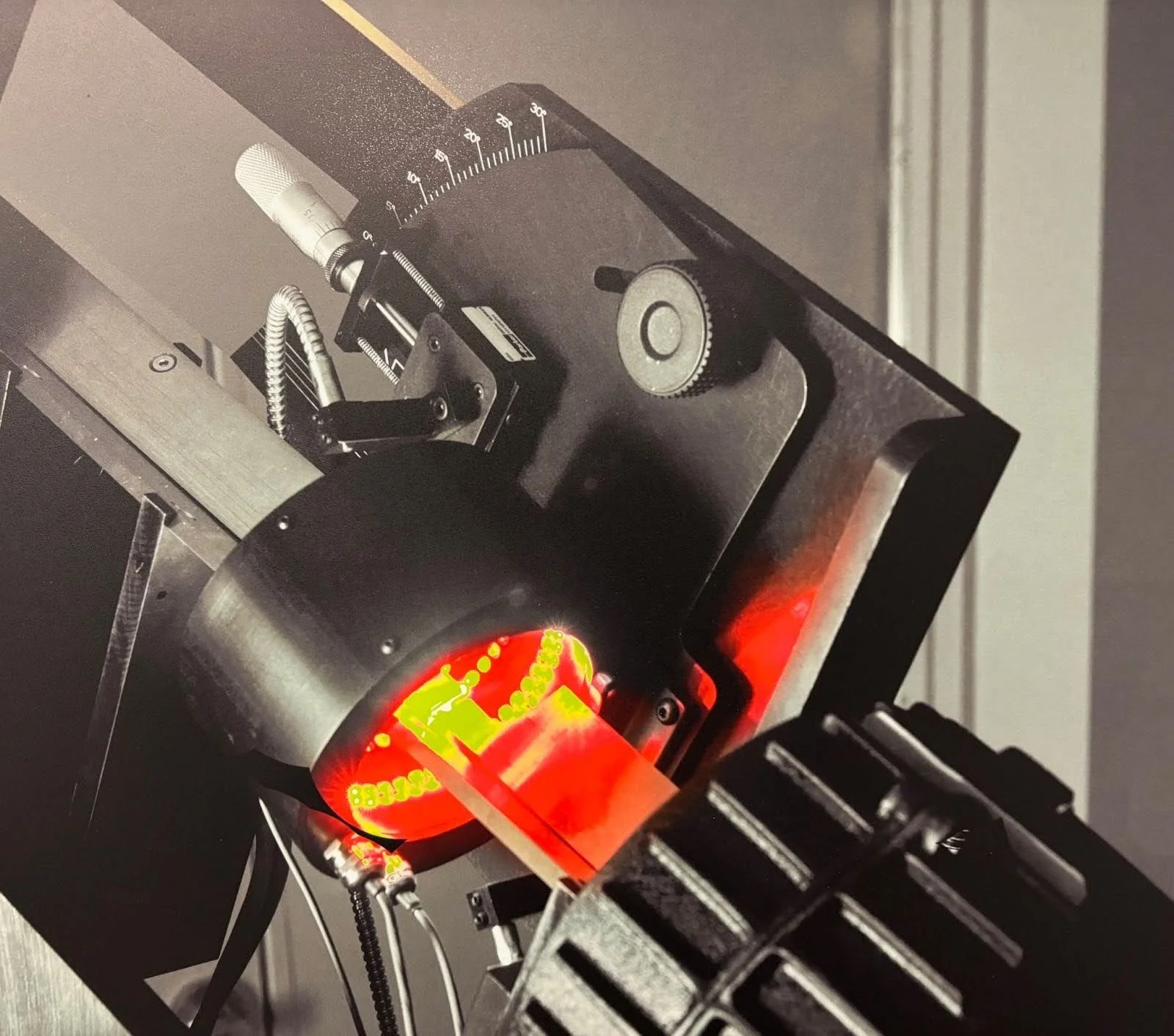
Also, our newly developed patent-pending Surface Qualifier 7500 (SQ-7500) uses statistical learning to inspect cylindrical parts; it takes over 1500 images per second, and between 200 and 500 images per part to give a 360-degree surface inspection.

Fastener Sorting Services Reinvented

Mectron’s fastener sorting services employ a complete range of laser, digital eddy current, and vision inspection systems for fastener inspection at high speeds. To guarantee that manufacturers deliver and meet customer expectations of 100% inspected and certified parts, our systems are developed to address the most minute aspects of any male or female fastener application. 

The Q-5000 comes with Mectron’s patented lasers for high-speed gauging and inspection of a range of fasteners and rejects any part that does not meet the set standards. In addition, Mectron uses other eddy current techniques like Magnetic Imagery™, which offers online metallurgical inspection and helps identify defects such as cracks, mixed materials, conductive plating, and hardness.

Laser Inspection Machines: A New Era in Precision

Mectron's laser inspection machines are in the vanguard of changing the notion of precision in various fields. With the help of modern laser technology, our systems ensure 360-degree inspection, which opens the way to the highest level of quality control. 

From aerospace parts, bullets, and screws to other products, Mectron’s laser inspection machines are a new benchmark in accuracy, durability, and productivity.

Enhancing Ammunition Quality with 360° Ammo Inspection at Mectron

Enhancing Ammunition Quality with 360° Ammo Inspection at Mectron

Ensuring the highest quality standards in the ammunition industry is crucial to guaranteeing safety and performance. At Mectron, our advanced inspection systems provide comprehensive 360° ammo inspection capabilities that significantly enhance ammunition safety and quality.

Automated Inspection Capabilities

Mectron’s Ammunition Inspection division boasts automated capabilities for top-of-the-line visual and dimensional inspection of ammunition, bullets, and casings. Eight lasers are utilized for 360° ammo dimensional inspection, and the Surface Qualifier captures over 1500 per second for 360° ammo surface inspection. Mectron’s inspection systems are designed to meet or exceed military specifications.

High-Speed Inspection Equipment

Mectron Inspection Systems has become an integral part of providing manufacturers the means to consistently deliver and satisfy customers with 100% inspected and certified parts. Our high-speed inspection equipment utilizes multiple methods designed for the most critical details of any ammunition application. 

The Qualifier (Q-5000) employs Mectron’s patented lasers for high-speed gauging and inspection for an unlimited variety of ammunition in a wide range of materials. This cutting-edge technology provides 360° inspection of each piece, displays its dimensions on the computer touch screen, and automatically inspects the part features and measurements.

Innovative Camera-Based System

In addition to laser technology, Mectron introduces the new patent-pending Surface Qualifier 7500 (SQ-7500), a camera-based system that uses statistical learning to inspect cylindrical parts. The parts traverse the machine by being rolled along an angled rail by a conveyor belt, allowing the camera to capture 360° images to inspect the cartridge, casing, or bullet. 

A single CCD camera executes additional vision inspection of the headstamp or primer. These configurations allow customers to check for case splits, deformations, corrosion, and primer inspection.

Meeting Stringent Military Specifications

Mectron’s High-Speed Ammunition Inspection Systems are built to meet or exceed military specifications, signifying its commitment to providing reliable, high-quality inspection services for ammunition manufacturers. 

Integrating advanced laser and vision technologies ensures that Mectron’s inspection systems effectively meet the stringent requirements of the military and other critical industries.

Quality Assurance and Customer Satisfaction

Mectron Inspection Systems are crucial in giving manufacturers confidence that their products are defect-free and meet the highest quality standards. This fulfills stringent industry requirements and enhances customer satisfaction by consistently delivering 100% inspected and certified parts.

Conclusion

Mectron’s 360° ammo inspection capabilities, powered by advanced laser and vision technologies, are a testament to its commitment to enhancing ammunition safety and performance. 

The comprehensive inspection services provided by Mectron play a pivotal role in ensuring that ammunition manufacturers can deliver top-quality products that meet the most stringent industry and military specifications.

Why Choose Mectron's Vision Inspection Machines?

Why Choose Mectron's Vision Inspection Machines?

Mectron is a leading provider of vision inspection machines designed for various industrial applications. Our machines are characterized by superior accuracy, speed, versatility, and a patented machine-learning algorithm. 

These features, combined with seamless integration into production lines, real-time feedback capability, and zero-defect manufacturing, make Mectron's vision inspection solutions an ideal choice for various industries.

High-Speed 360-Degree Inspection

Mectron's Qualifier Q-series sets the standard for high-speed gauging and metallurgical inspection of various parts in different materials. The Q-series features a patented laser array that provides a 360-degree inspection of each piece, displays dimensions on a computer touch screen, and automatically inspects part features and measurements. 

With 8 laser arrays and optional crack detection, a CCD vision system, and a digital eddy current, the Q-series offers unmatched accuracy and speed in parts inspection.

Patent-Pending Surface Qualifier 7500 (SQ-7500)

The SQ-7500 is a camera-based system that uses statistical learning to inspect cylindrical parts. Using statistical learning, it can obtain and analyze over 100 million data points per second and explore each data point in milliseconds. By capturing images of the part's surface at up to 1,000 images per second, each containing 98,850 data points, the SQ-7500 guarantees efficient and precise surface inspection. 

With a modular design featuring up to three stations, including two camera stations and one eddy current station for crack detection, the SQ-7500 provides comprehensive inspection capabilities for a wide range of cylindrical parts.

Seamless Integration and Real-Time Feedback

Mectron's vision inspection machines seamlessly integrate into production lines, allowing real-time feedback to ensure zero-defect manufacturing. The machines work with USB flash drive or network. This data can then provide feedback to the manufacturing process, aiding in identifying and addressing any deviations from the part print. 

By employing Mectron’s new statistical analysis software, the machines compare all parts to the known master parts, facilitating accurate and efficient defect detection based on a comparative test.

Versatile Eddy Current Inspection

Mectron's vision inspection machines feature versatile eddy current inspection capabilities, including a quick-connect differential probe and Mectron's advanced eddy current instrument. The system can detect cracks as small as .005” (0.12mm) and provides a user-friendly interface to control the eddy current’s visually displayed signal. 

This allows the displayed signal to be easily manipulated to maximize the difference between cracked and suitable fasteners, ensuring accurate and efficient crack detection across various industrial applications.

Conclusion

Mectron's vision inspection machines offer unparalleled accuracy, speed, versatility, and real-time feedback capabilities, making them the ideal choice for industries seeking zero-defect manufacturing. 

With advanced features such as high-speed 360-degree inspection, patent-pending surface inspection technology, seamless integration, and versatile eddy current inspection, Mectron's vision inspection machines are at the forefront of ensuring quality and precision in industrial manufacturing processes.

Integrating Eddy Current Inspection Equipment into Quality Control System

Integrating Eddy Current Inspection Equipment into Quality Control System

Quality control and assurance are crucial components of manufacturing processes across various industries. Integrating advanced inspection equipment, such as eddy current crack detection systems, ensures product integrity and compliance with industry standards. 

This article will focus on Mectron's innovative eddy current inspection equipment and its seamless integration into quality control workflows, providing real-time data and analysis.

Enhanced Precision and Versatility with Eddy Current Crack Detection Systems

Mectron's eddy current crack detection systems, including the RCD-9500, are designed to accurately detect cracks in parts using a differential eddy current probe. These systems offer a comprehensive 360-degree eddy current inspection of fasteners and various parts, ensuring thorough defect detection. 

The RCD-9500 is a versatile inspection solution that can work independently or in conjunction with Mectron Qualifier, LT, or MI8500 machines, providing flexibility in quality control setups.

Improved Accuracy and Efficiency in Inspection Processes

One key advantage of integrating Mectron's eddy current inspection equipment into quality control systems is its enhanced accuracy and efficiency in the inspection processes. The RCD-9500 has an array of optical sensors that enable fully automated part separation, feeding, scanning, and acceptance testing. 

Mectron's system ensures greater accuracy and reduced signal noise without compromising inspection speed by utilizing stationary motorized rollers to rotate parts in place during scanning. This approach improves defect detection and overall quality assurance.

Seamless Integration with Digital Eddy Current Instrumentation

Mectron's eddy current inspection equipment seamlessly integrates with the newly upgraded EC600, a digital eddy current instrument with specifically designed software for diverse applications. This integration allows complete control of the impedance plane signature by easily manipulating the eddy current signal, including frequency, phase, and horizontal and vertical gain. 

Moreover, the EC600 empowers users to set and alter high and low thresholds to determine differences between good and bad parts, enhancing inspection accuracy and reliability.

Unparalleled Inspection Speed and Flexibility

The differential eddy current probe implemented in Mectron's inspection systems and proprietary software enables high-speed inspection capabilities of up to 180 parts per minute. This innovative approach ensures rapid defect detection, accommodates lift-off variances, and increases accuracy for consistently moving parts. 

The modular design of the system's separator and roller systems allows for custom machining to suit unique parts without altering other tooling, contributing to the system's flexibility and efficiency.

Comprehensive Part Inspection and Compatibility

Mectron's eddy current inspection equipment is engineered to inspect various parts, including ball studs, wheel studs, and fasteners. The system's contoured rollers can be customized to correct for cosine angles of parts, ensuring comprehensive part inspection and compatibility with diverse components. 

Furthermore, the system's compatibility with the Mectron Qualifier for dimensional verification further enhances its capabilities in addressing comprehensive quality control needs across different manufacturing processes.

Conclusion

In conclusion, integrating Mectron's eddy current inspection equipment into quality control systems offers unparalleled benefits, including enhanced accuracy, reduced inspection times, and improved overall quality assurance. The seamless integration of advanced digital eddy current instrumentation and innovative inspection methodologies position Mectron's systems as essential components of modern quality control workflows. 

As industries continue to prioritize product integrity and compliance, Mectron's eddy current inspection equipment ensures superior quality and reliability in manufacturing processes.


The Critical Role of Industrial Sorting Services in Manufacturing Quality Control

The Critical Role of Industrial Sorting Services in Manufacturing Quality Control

Industrial Sorting Services: A Pillar of Quality Control in Manufacturing

Maintaining the highest quality standards is essential in the competitive landscape of manufacturing. Industrial sorting services play a pivotal role in upholding these standards, ensuring that only compliant and superior-quality parts make their way into the final assembly. These services are instrumental in enhancing not only the reliability but also the integrity of the entire manufacturing process.

Precision and Speed in Sorting: Mectron's Commitment to Excellence

When seeking an industrial sorting services provider, precision, speed, and unwavering commitment to quality are non-negotiable. Mectron Inspection Systems stands out as a beacon of excellence in this regard. Leveraging cutting-edge technology, Mectron's in-house services offer 360° dimensional inspection. 

They utilize eddy current for metallurgical and crack detection and lasers for achieving zero defect performance across a diverse range of components, including fasteners, deep draw components, aerospace parts, and ammunition. Mectron's dedication to precision and speed in sorting is unmatched, positioning the company as a trusted partner in the pursuit of manufacturing excellence.

Empowering Efficiency and Accuracy Through Advanced Technology

Mectron's fastener sorting service epitomizes the company's commitment to enhancing efficiency and accuracy in manufacturing. By harnessing its proprietary technology, Mectron provides manufacturers with high-speed dimensional and metallurgical production sorting, surpassing the limitations of manual or visual sorting. 

Bolts, screws, cylindrical parts, precision components, and various other products undergo meticulous inspection with the industry's leading laser and digital eddy current technology. Mectron's capacity to sort for foreign material, dimensional discrepancies, radial part damage, overall length, and metallurgical defects, even in large volumes and at a low cost, exemplifies the company's dedication to elevating the quality and reliability of the manufacturing process.

Industry-Specific Expertise and Reliability: Mectron's State-of-the-Art Facility in Saline

Mectron's state-of-the-art facility in Saline stands as a testament to the company's unwavering dedication to industry-specific expertise and reliability. With a proven track record of serving prominent manufacturers in the automotive, aerospace, and ammunition sectors, Mectron has established itself as a trusted partner in enhancing manufacturing quality control. 

The company's expertise in automotive, aerospace, and ammunition sorting is unparalleled. It ensures exact piece counts per carton and eliminates the risk of mixed parts, thus positioning itself as an exceptional and reliable supplier.

Elevating Manufacturers to Unparalleled Excellence

In the landscape of manufacturing quality control, Mectron Inspection Systems serves as a vanguard of unparalleled excellence. The company's precision sorting and inspection services are created to meet and exceed the stringent demands of the manufacturing industry, positioning it as a purveyor of uncompromising quality. 

Mectron's commitment to precision, efficiency, and industry-specific expertise empowers manufacturers to uphold the highest standards of quality control, fostering an environment of excellence and reliability in manufacturing.